India’s Economic Revolution: How a New Elite is Driving Unprecedented Growth
FINANCE
Robin Joyce
6/12/202515 min read
Introduction
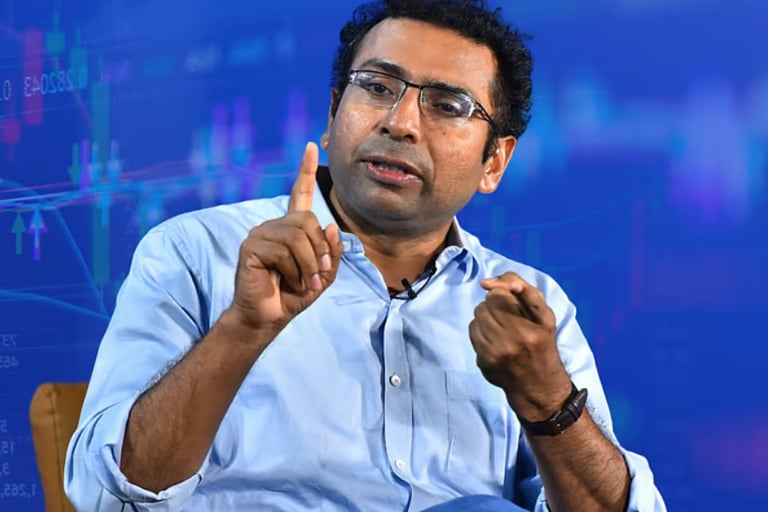
Hey friends, in this new blogpost, I welcome you all to a captivating talk delivered by one of the India's most celebrated investment managers, and when it comes to understanding India's financial evolution, only a few voices are there as respected as Saurabh Mukherjea, the founder of Marcellus Investment Managers. Known for his sharp insights and thoughtful research, Saurabh has spent decades studying the global markets, trying to build investment strategies tailored for Indian landscape. His gripping narration over the Indian economic landscape on any centre stage did portray him as an economic ambassador of the incredible India. His investment strategy, beautifully depicted in "Coffee Can Investing", emphasizes identifying fundamentally strong companies having a strong business moat with proven track record of generating consistent cash flow and profit. The core idea is to invest in these companies and hold them for an extended period of time, eliminating all the short-term volatility in the market. Beyond his research at Marcellus, Saurabh is a prolific writer on economic and market affairs. He has authored numerous books that investigate into his investment principles and observations on the Indian economy and businesses. Some of his notable books include: 1. Coffee Can Investing: The Low-Risk Road to Stupendous Wealth, 2. The Unusual Billionaires, 3. Diamonds in the Dust: Consistent Compounding for Extraordinary Wealth Creation, 4. Gurus of Chaos: Modern India's Money Masters, 5. Behold the Leviathan: The Unusual Rise of Modern India. As a follower of Mr. Saurabh Mukherjea's work for the past 3 years, I must tell you that I was completely lost by his talk “The Rise of a New Indian Elite” hosted on Asia Society YouTube Channel. Allow me to deep dive into the details and summarize the concepts in the video.
Introduction: India's Unstoppable Rise
India is no longer a lethargic economy as it was a decade ago. Today, it is a powerhouse, to be precise the world's fifth largest economy and fourth largest stock market, boasting some of the highest corporate profit growth rates globally. At the event, Saurabh Mukherjea, laid out a compelling case for why India is entering a golden era of economic expansion. His insights reveal a dramatic shift of an economy dominated by a few elite corporations to one where thousands of fast-growing challenger businesses are driving unprecedented wealth creation. Starting from Japan’s investment in India to his own acronym WESCO, Mukherjea simplify India’s economic transformation in a well-structured manner for everyone to understand, even if you are not a finance expert. The opening session grips the readers with the Japanese Blueprint for success, showcasing how the well-structured corporate giants like Suzuki and Honda invested in India churning 70x and 140x in a record-breaking span of 15- 17 years. Saurabh highlights the emergence of a "challenger class" where rapidly growing 6000 mid-sized companies are achieving profit growth rates of 15-25% annually. He explores the key drivers of India's economic surge led by UPI, robust digital infrastructure and rising Foreign Direct Investment. Saurabh also introduces the New Indian Elite behind India's economic success, given by the acronym WESCO, as a central force for this momentum, while identifying the potential bottle necks that lie ahead.
1. The Japanese Blueprint: How Suzuki & Honda Proved India's Potential
India’s growth story is not new. Japan has invested $25 billion in India in the past decade. From the hundreds of investments to say, the two most prominent investments are made by Suzuki and Honda. You know what, they have been crushing it here in India for decades. Suzuki (Maruti Suzuki), the largest car company in India with a market capitalization of 8 trillion Yen in India, dominating 45% of India’s car market share are selling 2.5 million cars annually irrespective of the presence of global car manufacturers from America, Europe, China and Korea operating in India. Suzuki’s listed entity in India went public almost 20 years ago and since then its stock compounded 23% resulting in a 70x returns in 20 years. The second largest Japanese investment in India is Honda’s two-wheeler business (5 million two wheelers every year) that has seen even more jaw dropping numbers, with profits rising 140x in 17 years (being independent with no Joint Ventures) (a 36% compounded annual growth rate). The third investment is Sony, too has established a firm foothold, raking in over a billion Yen in India annually.
These investments prove to have a vital point: the norm now in India has become that well run companies are handsomely rewarded, regardless of whether they are domestic or foreign. And the result is worth looking the stock market over the past 10 and 20 years. Money in terms of dollar returns over the past 20 years, India is the best performing market in the world (13.1% annual compounding) followed by Taiwan (11.3%) and US (10.3%). Dollar returns over past 10 years, US market outperforms the world (12.8%) followed by Taiwan (12.6%) and India (10.1%). In the past 1, 2 and 3 decades, the two largest free market democracies in the world (US and India) have consistently excelled in driving two digit returns and Saurabh attributes this to the contestability of power. This contestability of power is creating a new elite in the country, “The Challenger Class”.
2. The Rise of the "Challenger Class"
The growth of Indian companies is another testament to the country’s dynamic economic environment. Previously, only about 600 companies in India called the “rulers”, resembled global standards in performance and governance. Now, more than 6000 mid-sized rapidly growing companies are achieving profit growth rates of 15-25% annually. Looking at the Indian corporate tax data, the fastest growing companies are no longer the ruler class, as they continue to dominate profits of 60%, it is the next 6000 companies as they are called the “challengers” which are the 1.5% of India’s companies now account for 25% of profits. The first 20 or 30 years of Indian capitalism was about the well-run Japanese companies, but the last decade is all about these smaller Indian companies called the challenger class companies. These companies are highly profitable yet agile, spread across various sectors and services, built on the back of technology adoption and financial prudence and not only flourishing within domestic markets but are also extending their global reach. This massive increase signals the broadening base of corporate excellence in India, creating a much larger, deeper pool for investors.
3. Driving Factors Behind India’s Economic Success
Saurabh Mukherjea attributes to some of the key factors that India has managed to get things right in the last decade that contribute to its remarkable economic growth and rise of new elite:
Digital Infrastructure and Technological Advancements: India’s digital revolution, characterized by the introduction and widespread adoption of the Unified Payments Interface (UPI), has significantly transformed the financial landscape. Almost 55% of the national income is now mobile commerce phone to phone payments. With zero transaction cost, UPI has streamlined financial transactions, making them more efficient and on a small business perspective, the working capital cycles drops dramatically (from 20% to 10% in the last 4 years). The notable point here is that the banking system can now track every transaction made by a small vendor in real time thus encouraging small businesses by enhancing their creditworthiness and growing the small and medium sized enterprise lending by 35%. Seeing the high velocity of revenue generated out of a small vendor, both banking and non-banking lenders do cash flow financing, generating income for the small vendors and in return the banks make more money out of lending.
Affordable Mobile Data Costs: India benefits from one of the lowest mobile data costs in the world that offers data prices 1/50th of the U.S., making the internet accessible to over a billion people. India uses more mobile data than the whole of North America put together. This has democratized education, financial services, and entrepreneurship, allowing small businesses and rural populations to connect with national and global markets. This affordability has catalyzed the growth of mobile commerce both in terms of payments and in terms of digital marketing, providing substantial advantages to small businesses and contributing to overall economic activity.
Infrastructure Development: Investments in infrastructure across transportation, logistics, and digital connectivity, have played a crucial role in supporting economic growth. The development of smart cities and industrial corridors further strengthens the country’s economic capabilities.
Foreign Direct Investment (FDI) and Global Trade: India’s attractiveness as an investment destination is evident from rising foreign direct investment levels. FDI inflows have significantly boosted various sectors, including technology, manufacturing, and services, contributing to India’s economic expansion.
4. The New Indian Elite Behind India's Economic Success: Breaking Traditional Barriers
Mukherjea identifies five key groups forming India's ‘new elite’, captured with WESCO: They are Women, Education, South India, China+1, and Outsourcing.
Women: Empowerment - A defining feature of India’s economic transformation is the progress of women. Who would have thought a decade ago that Indian women would make this sort of economic progress and the data is coming through thick and fast. The economic fortunes of Indian women have been transformed in the last decade. Historically, Indian women faced significant barriers to economic participation, but recent advancements have marked a dramatic shift. For the first time in the last decade, women surpass men in primary, secondary, and higher education enrolment and the pass rates for women are far higher than the men. In major cities, women’s bank accounts hold more deposits than men’s for the first time ever and women also have more bank accounts than men, reflecting a shift in economic power. The increasing presence of women in leadership positions in both corporate and entrepreneurial sectors further underlines this progress. Factories and offices staffed predominantly (some even 100%) by women are becoming increasingly common, highlighting their economic empowerment. Saurabh attributes to this observation saying that 65% of Indian GDP is services, be it financial, media or hospitality and since services doesn’t need muscle, hence if you are educated, you get the best jobs in services. Around 20% of GDP is manufacturing and much of our manufacturing is light industrial manufacturing. For example, an iPhone made in India, the muscle does not have any role hence 90% of iPhone outsourced contractor staffs in India are women. Thus, companies serving female consumers, such as Nestle (infant nutrition) (worth $25 billion) and Westside (affordable fashion clothing line called Zudio increasing sales per store by 25% each year), are roaring or outperforming their peers. So, if women are doing well, then naturally companies that cater to Indian women would definitely thrive. Thus, increasing participation of women in the workforce and leadership positions is contributing to a more balanced and dynamic economic growth model.
Education: Changing Backgrounds - India’s educational landscape is undergoing significant changes, influencing the profile of successful professionals. Traditionally, prestigious institutions like the Indian Institute of Technology (IITs), Indian Institute of Management (IIMs) and the Ivy League colleges have long been considered the pinnacle of academic achievement. Browse through boardrooms of India’s top 50 listed companies till a decade ago, the directors were elite educated. Taking the data from the present Indian boardroom composition, for the first time in the Indian history, the majority of boardroom directors in India are not elite educated. A growing recognition of talent is emerging from local universities and non-traditional educational backgrounds overthrowing the established elites. Graduates from regular Indian universities are now leading major corporations and startups as the scope of opportunities are so large that a few elite people or universities could not feed an economy growing at 8% a year. Large institutions like HDFC Bank, one of India’s most successful banks, boast leadership teams composed largely of non-elite graduates. Interesting fact that the Indian venture capitalists specifically look for people without elite education as they attribute to someone who is elite educated has a mindset that focuses on success within a structured framework whereas to succeed in India, you need a mindset that thrives in taking open ended challenges. Nothing matters other than understanding technology, managing multiculture people and having entrepreneurship instincts. This shift reflects a broader trend where practical skills, innovative thinking, and entrepreneurial spirit are becoming more valued than traditional academic credentials. This changing landscape emphasizes the importance of adaptability and creativity in achieving professional success.
South India: Regional Growth - Peninsular India is pulling far ahead of the rest of the country in economic dynamism. South India, encompassing states such as Maharashtra, Karnataka, Tamil Nadu, Telangana, Andhra Pradesh, and Kerala are becoming a significant driver of India’s economic growth. Peninsular India has quarter of the country’s population, half the GDP, 60% of India’s growth growing at 8 to 9% per annum and this is the world’s fastest growing region. Cities like Bangalore (tech), Chennai (auto manufacturing), and Hyderabad (pharma and tech) are among the fastest growing cities in Asia doubling every 6 years or so. Why is South India pulling away from rest of the India is a very deep question to answer, but the right thing to do now is to overindex the South. May be, the region benefits from a highly educated workforce, excellent law enforcement, advanced infrastructure, and a favourable business environment. Companies like Asian paints do have a firm root in South India selling paints through 150,000 shops and still expanding rapidly. Investors increasingly prioritize firms rooted in the Southern states, recognizing their incredible growth dynamics.
China + 1: Global Geopolitical Shifts - The shifting geopolitical landscape, particularly the trade tensions between the US and China, is creating new opportunities for India. As companies seek to diversify their supply chains and reduce reliance on China, India is emerging as an attractive alternative. Sectors such as mobile phones, pharmaceuticals, and medical devices are witnessing increased investment and production shifts to India. This shift is creating millions of new jobs and deepening India’s integration into global supply chains. Apple makes $200 billion worth of iPhones and till 3 years ago India makes $2 billion worth of iPhones. India now manufactures $22 billion worth of iPhones annually. Imagine if Apple moves even quarter of their production to India, we make $50 billion worth of iPhones. Saurabh foresee if the chips come from Taiwan, the display comes from elsewhere and even if they make 30% of the phones in India, this would be a significant boom for our GDP. The metal casing of iPhone is made by a process called metal injection moulding taking the steel powder that takes the shape of iPhone. This process done by a company in the outskirts of Bangalore called Indo-MIM and as they go public in next 4 years, or as they become larger and larger supplier to Apple in India, as Apple deemphasize China, we should bet on companies like Indo-MIM. This company has contracts for moulding the rifles in America too. Thus, the supply chain going into iPhones and iPads have other spin off benefits assuming anywhere between 50 to 100 billion dollars opportunity. Saurabh articulates the opportunities in Pharmaceuticals, India could double its market share in active pharmaceutical ingredients (API) production, creating an environmental and regulatory balancing challenge. Surprisingly, China makes 80% of the world’s API, India makes 10% and remaining 10% is spread across the world. U.S. regulators are keen on reducing the dependency on China, the natural place to come is India. Company like Divi’s Lab manufacture Naproxen - 80% of painkillers in the world, half of the cough syrups in the world, nearly 30 API comes from this lab. If a 10% share is sucked out of China’s $100 billion of API, our API industry would double in next 3 years. Similar boom will happen to chemical industries and ceramic glass reactors that make API. A $400 billion global market (China makes $200 billion) waits for medical devices (ECG, X-ray, cannulas) and India (making $2 billion) is poised to capture a significant slice of it. India’s ability to capitalize on these opportunities highlights its growing influence in the global economy and its potential to play a more prominent role in international trade and commerce.
Outsourcing: Rise of Global Capability Centers (GCCs) - The establishment of global capability centers in India reflects the country’s growing role in global business operations. This is driven by the country’s skilled workforce, cost advantages, and favourable business environment. Western companies are increasingly outsourcing functions to India, leveraging its expertise and efficiency. A mad rush was observed by American and Western companies outsourcing various functions to India, capitalizing on its skilled workforce and cost advantages due to skill shortages after Covid. Everybody who has got talent in America and UK would either want to work on Wall Street or the City of London or in the Silicon Valley, that created a significant talent shortage. It is better for the CEO of a company saying that we have converted the fixed costs into variable costs and that we have outsourced the work to an Indian company or that we have setup our own facility in a second-tier city, where talent is available, infrastructure is cheap, airline connectivity is good, mobile data is available cheap. Beyond IT services, India now handles accounting, HR, finance, and sales functions for global firms. Thus, sectors like finance, HR, and marketing are increasingly shifting to India. One new Global Capability Center opens in India every single day and 1600 are already in place. The service sector GDP of the Western world is $15 trillion, assuming only 10% of that gets outsourced to India, that is a whooping $1.5 trillion. India’s current outsourcing industry stands at $300 billion and Saurabh reckon that this is projected to grow five-fold over the next decade. This trend is transforming India into a key player in global business processes and operations that ensures stable, high-quality white-collar job creation far into the future.
5. Potential Bottlenecks That Lie Ahead
Mukherjea cautions that the journey ahead isn’t without obstacles. He projects two inter-related issues which are tricky and challenging for India.
Premature Automation: Industries like IT and finance are rapidly automating, eliminating jobs even before full employment is achieved. India being a high-tech country, we are automating very early in the economic development process. India is the 140th poorest country in the world, yet our airports are incredibly high tech which is counterintuitive. Challenge is to create jobs for people. The technology is so cheap that it is been used everywhere, be it the finance sector, IT sector, pharma sector, and this move would basically get rid of people by automating very early in our development.
Underemployment Crisis: Nearly 200-300 million young Indians remain jobless and unskilled. The IT services in India being the largest in the world, shed more people this year because they make more money out of fewer people. This is a major challenge that India is facing now. The immediate solution might be subsidizing everything for the jobless young people, but it comes with an economic cost. India has an $80 billion bill to look after these unemployed people, but it comes at a human cost. The lack of skilling and rise of low-cost automation are moving in the opposite directions and the challenge is that we need policies that promote AI and robotics to augment jobs and not to replace them.
High Cost of Capital and Infrastructure Hurdles: The host for the show had a very interesting observation on India’s development model. The country followed a model that was never seen before. Normally, a developing country goes through phases of agriculture as the primary sector, then go to manufacturing and then to the service sector later and India skipped that part of manufacturing a bit in terms of microeconomic levels hence there are lots of brown and white goods to be imported. Saurabh answer the question in a tricky way saying that India is the only country on the entire planet to become democracy way before it became rich. Even though India is the 140th poor nation in the world, the minimum wage here is 3 times more than in Bangladesh meaning India’s cost of financing business remains higher than countries like Vietnam or Bangladesh. The worker rights are far more developed so that the minimum wages are high. To build rapid infrastructure development, India needs to go over the farmlands as we are one of the most fertile countries in the world, farmers protest to unravel their land unless a massive handout is given. Forget the farmland, even in cities it is hard to slam metro through the congestion. In-spite of all these hurdles, India managed to double the highway network in the last decade and tripled in last 20 years. Land acquisition, regulatory hurdles, and infrastructure bottlenecks continue to limit manufacturing competitiveness.
Conclusion: A New Dawn, With Complexities
India is scripting a historic transformation marked by the rise of a new elite, driven by a confluence of factors that include digital innovation, educational shifts, regional growth, geopolitical changes and a young ambitious population. The nation’s impressive economic performance, coupled with significant investments and advancements, is reshaping its role in the global economy. The emergence of a new Indian elite, characterized by empowered women, evolving educational backgrounds, and regional economic growth, reflects a broader transformation within the country. Yet, challenges remain, ensuring job creation, balancing automation, and continuing infrastructure development are critical. Still, India’s trajectory remains overwhelmingly positive. As Mukherjea summed up: “No country has ever created prosperity on this scale, at this speed, while remaining a democracy.”
Endnote: Why This Matters to Everyone
Whether you are an investor, entrepreneur, policymaker, or simply a curious observer, India’s story is impossible to ignore. The world’s largest democracy is not just rising; it’s reshaping the future of business, innovation, and society itself.