How Perplexity AI is Redefining the Future of Search and Challenging Google
TECHNOLOGY
Robin Joyce
10/2/20259 min read
Discover how Perplexity AI plans to redefine search engines, compete with Google, and leverage AI to deliver precise answers. Insights from its founder on strategy, Jeff Bezos investment, and the future of AI-powered search.
Introduction
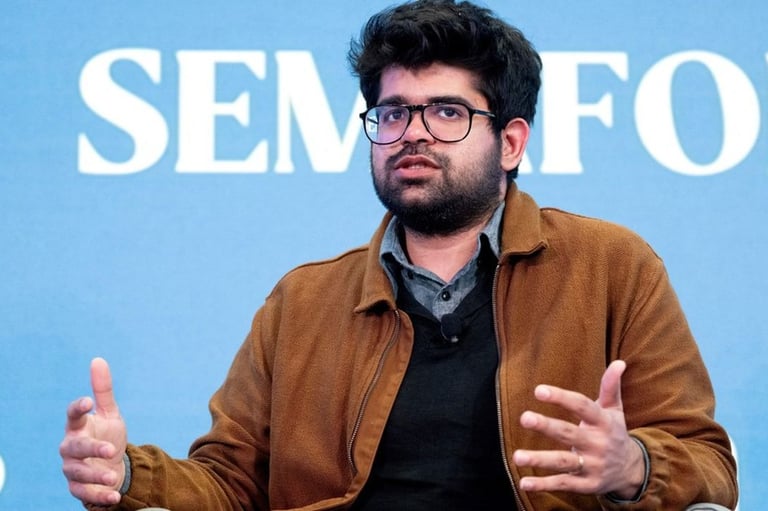
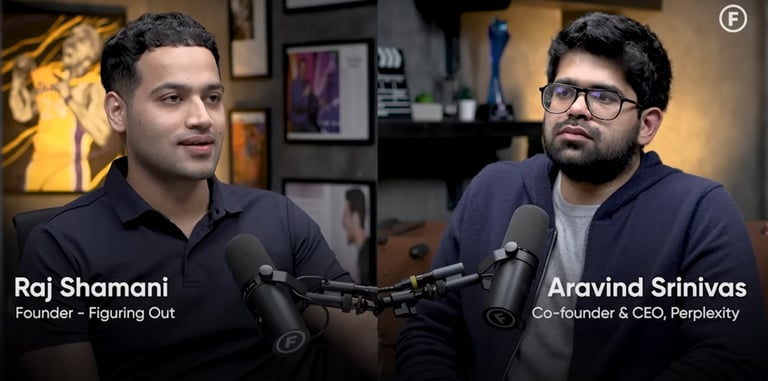
In a digital landscape where Google has governed supreme as the undisputed champion of online search for over two decades, a new contender is emerging with a radically different approach to search. Perplexity AI, a rising star in the AI driven search space, is positioning itself not just as another search tool, but as a fundamentally better way to find information. The question on everyone’s mind is simple yet profound: Can Perplexity AI truly compete with Google and it's default homepage, a first step in our digital curiosity, and an integral part of everyday life or is it destined to remain a niche player in the shadow of the search giant? The founder of Perplexity AI recently shared an in depth look at the company's journey, that’s not only capturing attention with its unique product offering but also winning hearts and headlines by attracting big-name investors like Jeff Bezos. What makes this conversation compelling is the candid admission by the co-founder Aravind Srinivas that Perplexity isn’t trying to “beat” Google in the traditional sense. Instead, it is carving out a new category of search that one prioritizes deep, contextual answers over a list of links. This blog explores the nuances of Perplexity’s strategy, the gap it aims to fill in today’s search experience, and the broader implications for the future of AI and information retrieval. We will delve into the company’s origins, its unique value proposition, and why some of the brightest minds in tech, including Jeff Bezos, are betting on its success.
The Story Behind the Curious Name: "Perplexity"
Names matter in tech. They shape first impressions, influence brand recall, and can even determine whether a product gains traction. So why did Perplexity AI choose a name that even its co-founder admits is "one of the worst for a consumer company"? The answer lies in the company's origins. When the founder started Perplexity, the vision was not fully crystallized. The team knew they wanted to innovate in search, but the exact form of the product was still taking shape. At the time, securing a domain name was a practical challenge, especially with limited funding. The domain "perplexity.ai" was available for just $120 for two years, a good bargain, compared to the exorbitant prices of more consumer friendly names. But more than that, the term "perplexity" holds specific meaning in the field of artificial intelligence. It refers to a metric that measures how well a model predicts a sample of data, a direct nod to the company's mission. For a company rooted in artificial intelligence, the name was a nod to its technical foundations. That said, the founder acknowledges the branding hurdles it presents. Unlike sleek, memorable names like "Google" or "ChatGPT", "Perplexity" doesn’t exactly roll off the tongue. This self-awareness is refreshing. The founder openly discusses the possibility of rebranding the product while keeping "Perplexity" as the company name. It's a pragmatic approach, one that balances the company's geeky roots with the need for mass appeal.
Jeff Bezos' Investment: A Memo, a Demo, and No Meeting
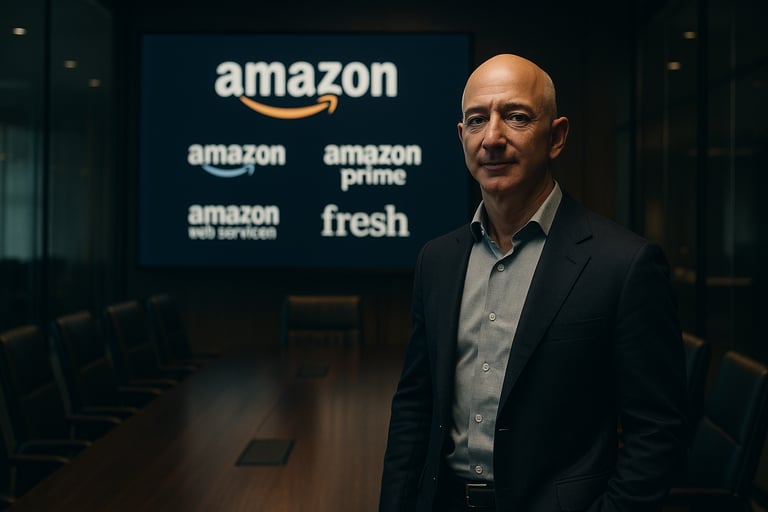
Few moments in a startup's journey are as pivotal as landing a high-profile investor. For Perplexity AI, that moment came when Jeff Bezos decided to back the company, without even meeting the founder first. Then, how does a founder go from being relatively unknown to securing investment from one of the world's most influential tech leaders? Surprisingly, the process began not with a boardroom pitch, but with a personalized touch. The process was anything but conventional. Bezos, known for his preference for written communication, requested a memo outlining Perplexity's vision. But the founder didn't stop there. He also created a custom demo, an imaginary conversation where Bezos himself interacted with Perplexity's voice AI. The demo featured Bezos asking questions about Star Trek, Blue Origin, and other topics close to his interests. The uniqueness and thoughtfulness of this approach stood out. The result? Bezos approved the investment based solely on the memo and demo. There was no pitch meeting, no lengthy due diligence, just a clear, compelling case for why Perplexity mattered. Bezos' involvement didn't end with the investment. Later, when he did request a meeting, it was not for a superficial talk, it was a deep dive. In the subsequent interactions, he offered sharp, actionable advice that underscored his deep understanding of scaling businesses. Two insights stood out: First, he emphasized that Perplexity's success didn't hinge on Google's failure. This was a crucial reframing. Instead of positioning itself as a "Google killer", Perplexity could thrive by solving problems Google wasn't built to address. Second, Bezos stressed the importance of retention. "Don’t be a leaky bucket", he advised. In other words, acquiring users is only half the battle, keeping them engaged is what separates enduring companies from flash-in-the-pan successes. This level of mentorship speaks volumes about Bezos' belief in Perplexity's potential. It also highlights a broader trend: the best investors don't just provide capital; they offer strategic clarity.
Google vs. Perplexity: Where Does Perplexity Win?
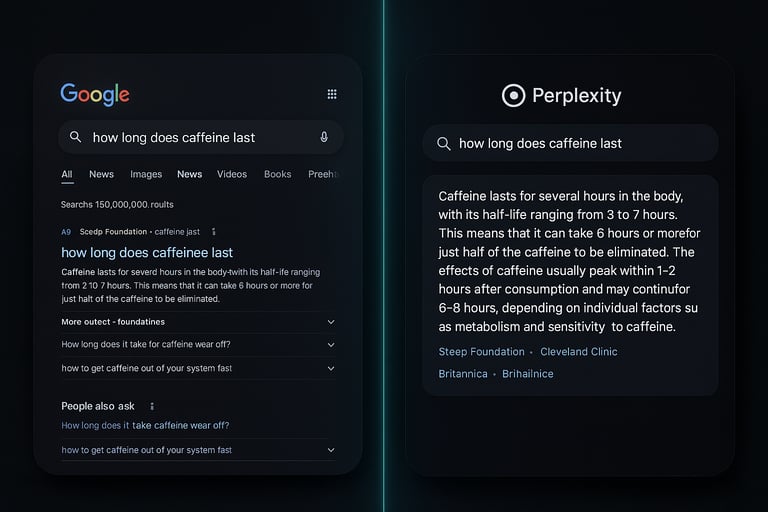
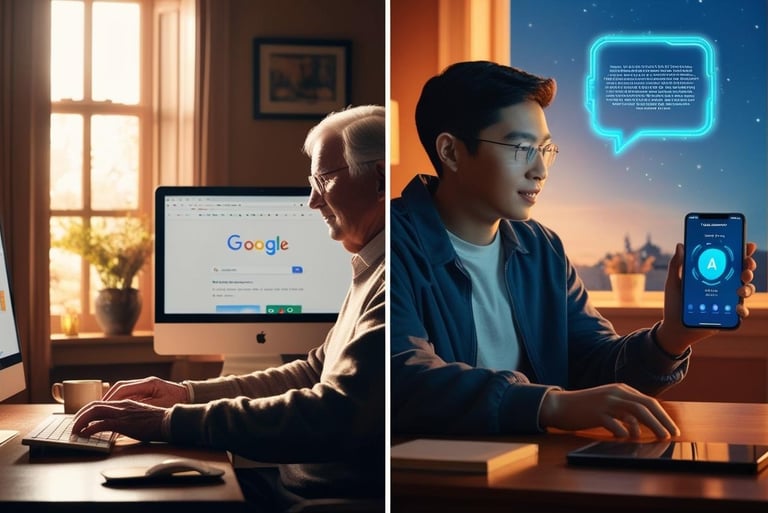
To understand Perplexity’s value proposition, it is worth examining how it differs from Google. At first glance, both platforms help users find information. But the similarities end there. Google excels at what is known as "navigational search". These are the quick, navigational queries (which aims to find a specific website) we have all typed a million times: "weather in New York", "Amazon login", "Sachin Tendulkar age". The average Google query is just 2-3 words, reflecting its role as a gateway to the web. Perplexity, by contrast, is designed for deeper, more complex questions. The average query on Perplexity is around 10 words, a sign that users are treating it less like a search engine and more like a research assistant. For example, while Google might handle "Sachin Tendulkar age" with ease, Perplexity shines when asked, "How many times did Sachin score a century but India lost the match"?
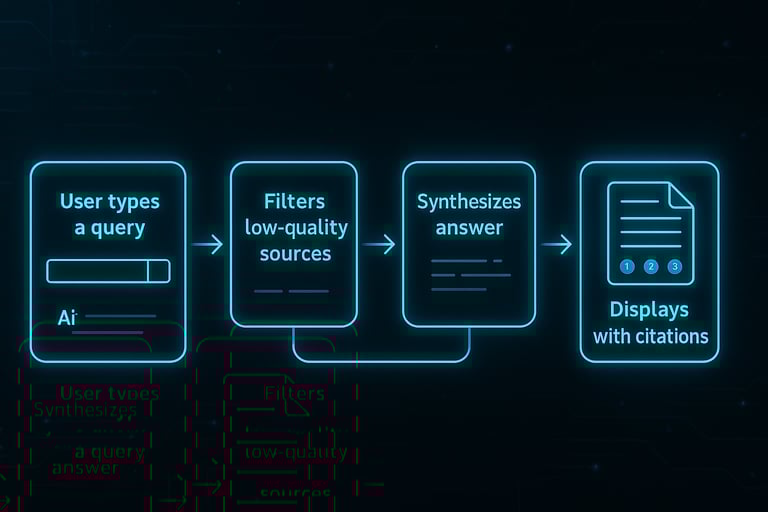
This distinction is critical. Google's strength lies in its ability to index the web and surface links. Perplexity’s advantage is synthesizing information from multiple sources into coherent, citation-backed answers. It is the difference between being handed a stack of books and being given a well-written summary. Google became dominant by becoming a habit. It is what we grew up with. But younger generations are forming new digital habits, and Perplexity sees this as a huge opportunity. Instead of typing one-word searches like "Instagram" or "weather", users of Perplexity ask full questions, averaging ten words or more. They are looking for understanding, not navigation. This behavior isn't just a coincidence; it represents a deeper shift in how people seek knowledge. As the new generation matures, they will default to tools that speak their language. As AI advances, people are asking more sophisticated questions, everything from troubleshooting technical issues to parsing legal documents. Perplexity is betting that this trend will only accelerate, creating a new category of search that traditional engines are not optimized to handle. If Perplexity can capture that mindshare, it could become the search default of tomorrow.
Will Perplexity's Competitive Landscape Replace Titans?
You might be wondering why hasn't anyone challenged Google successfully in the past 20 years? May be, the timing just wasn't right. Today, the situation is different. Consumers are more tech-savvy and AI-aware. Tools like ChatGPT have trained people to expect conversational answers, and not just hyperlinks. And existing players like Google, Microsoft, and Meta are all racing to adapt. The founder of Perplexity is refreshingly realistic about the company's ambitions. He isn't predicting Google's downfall or claiming Perplexity's 90% dominance of the search market. Instead, he envisions a more balanced landscape where multiple players coexist, each serving different needs. Success, in his view, is not about usurping Google but about creating a product so compelling that even Google employees use it. Imagine a world where tech-savvy users, including those at Google, turn to Perplexity not out of rebellion, but because it genuinely offers a better experience.
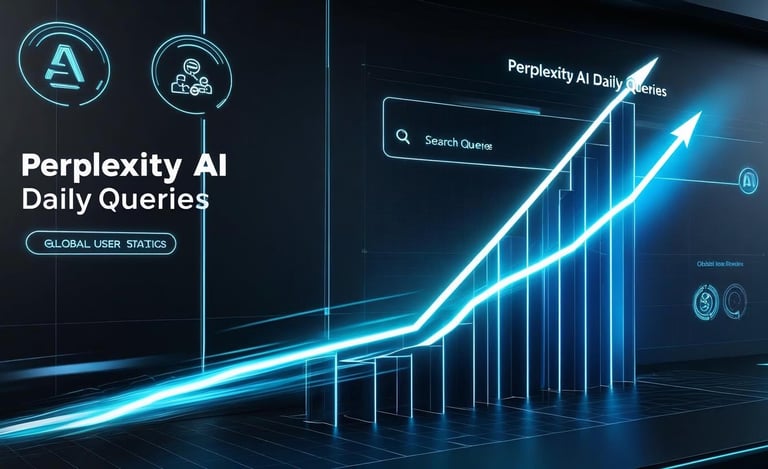
This vision hinges on several factors. First, Perplexity must continue to differentiate itself in areas where Google struggles, such as complex, multi-part queries. Second, it needs to maintain its agility, avoiding the bureaucratic slowdowns that plague larger companies. Finally, it must navigate a competitive landscape that includes not just Google but also OpenAI's ChatGPT, Elon Musk’s Grok AI (xAI), and other emerging players. While these companies have massive resources, Perplexity banks on something else: focus, agility and efficiency. Where OpenAI spends billions on training its own models, Perplexity uses existing best-in-class models and focuses on how the answers should be orchestrated. This dramatically reduces cost and increases speed to market. Due to the founder's measured optimism along with the clarity of vision, combined with a strong product and focused leadership, has helped Perplexity scale quickly, now processing 20 million queries a day. He acknowledges that Google won't disappear overnight. But he also recognizes that the search industry is ripe for disruption, and Perplexity is well positioned to lead that charge.
India's AI Adoption: Strengths and Challenges
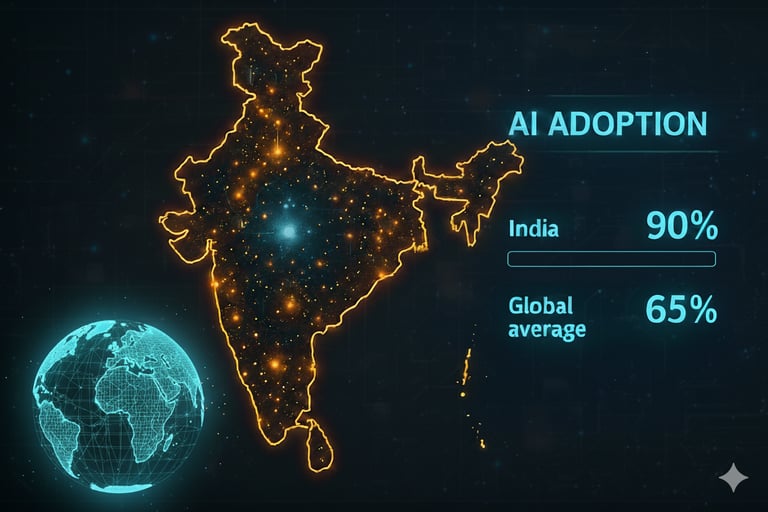
India presents a fascinating case study in AI adoption. With over 90% of knowledge workers using AI tools, compared to a global average of 65%, the country is ahead of the curve in embracing this technology. This rapid adoption comes with opportunities and challenges. On the positive side, AI can amplify productivity, enabling workers to take on more complex tasks or even launch side gigs. The founder envisions new businesses emerging in healthcare, software development, and financial consulting; all powered by AI. Independent professionals will be able to scale their offerings, and new value will be created from scratch. For example, an AI powered financial advisor could analyse market trends in seconds, offering insights that were once the domain of high-priced consultants. But there is a flip side. Jobs in sectors like call centers and software consulting may face disruption as AI automates routine tasks. The key, according to the founder, is restructuring rather than resisting. Businesses that leverage AI to boost efficiency can reinvest those gains into higher-value roles, creating a win-win for employers and employees alike. For India to fully capitalize on AI, its entrepreneurs must think beyond local markets. The next wave of AI driven companies shouldn’t just serve Indian users; they should build globally competitive products that redefine industries.
Digital Amnesia: Is AI Making Us Forget More?
With great power comes a peculiar side effect: "digital amnesia". As AI becomes ubiquitous, a subtle but significant shift is occurring: the rise of digital amnesia. The question here is: as we rely more on AI tools to remember things, guide us, and answer our questions, are we weakening our own cognitive muscles? This phenomenon, where people rely on technology to remember information for them, is not something new. Calculators reduced our need for mental math. GPS eliminated the art of map-reading. Mobile phones eliminated the need for remembering phone numbers. Now, AI threatens to erode our ability to retain facts altogether. The founder acknowledges this risk but offers a counterpoint: If AI handles rote memory tasks, it could free our mental bandwidth for creativity and problem-solving. The challenge is ensuring that this trade-off does not leave us intellectually impoverished. Still, it will require a cultural shift to ensure the next generation does not become too dependent, and too passive. The answer lies in balance.
Conclusion: Who Loses If Perplexity Wins?
If Perplexity succeeds in redefining search, the biggest loser won’t be a startup or a mid-sized player; it will be Google. But even then, Google's dominance won't vanish overnight. The more likely outcome is a fragmented market where no single company controls 90% of search. For users, this competition is a win. More choices mean better products, sharper innovation, and ultimately, a richer experience. But in the emerging era of conversational queries, AI powered, answer-first platforms might become the tool of choice for a generation raised on clarity, speed, and depth. The question is not whether Perplexity will beat Google. It is whether it can carve out a space where it thrives alongside it.
If you could ask an AI one question today; something Google struggles to answer, what would it be?
Endnote:
Perplexity AI isn't just another startup trying to ride the AI wave. It is a focused, efficient, and user obsessed company that is slowly but surely redefining how we approach information. From its humble beginnings and geeky name to winning the backing of Jeff Bezos and processing millions of questions a day, it represents a new chapter in the evolution of search. Perplexity AI represents more than just another search engine. It is a glimpse into a future where finding information is less about sifting through links and more about engaging in a conversation. Whether it dethrones Google or simply forces it to evolve, one thing is certain: The age of AI powered search is here.
How To Build Billion Dollar AI Business - Elon Musk, Google & Future | Perplexity |FO349 Raj Shamani